Novel metronome web application
This has been a pet project of mine for a well now. While in my graduate studies, I often found myself creating click tracks in Ableton Live for pieces that I was learning. I created these not for a performance but for practice, since many of these pieces had complex time signature changes. Being in Ableton Live was great, because I could then loop certain sections and slow them down to enhance my practice.
Many of my fellow students saw this and wanted this as well. Since they didn’t have Ableton Live, I would create WAV files that they could use, but they weren’t able to dynamically loop and slow down sections. This is when I thought “wouldn’t it be great if they could create a metronome for themselves, based on a certain piece they were learning? Maybe even in a web browser? What happens then if we shared these so that everyone didn’t have to re-enter all of the measures for common pieces?”
Along my journey as a software developer, I keep returning to this project, improving it, doing more, and using what I’ve learned in the industry to make this a tool for the modern musician.
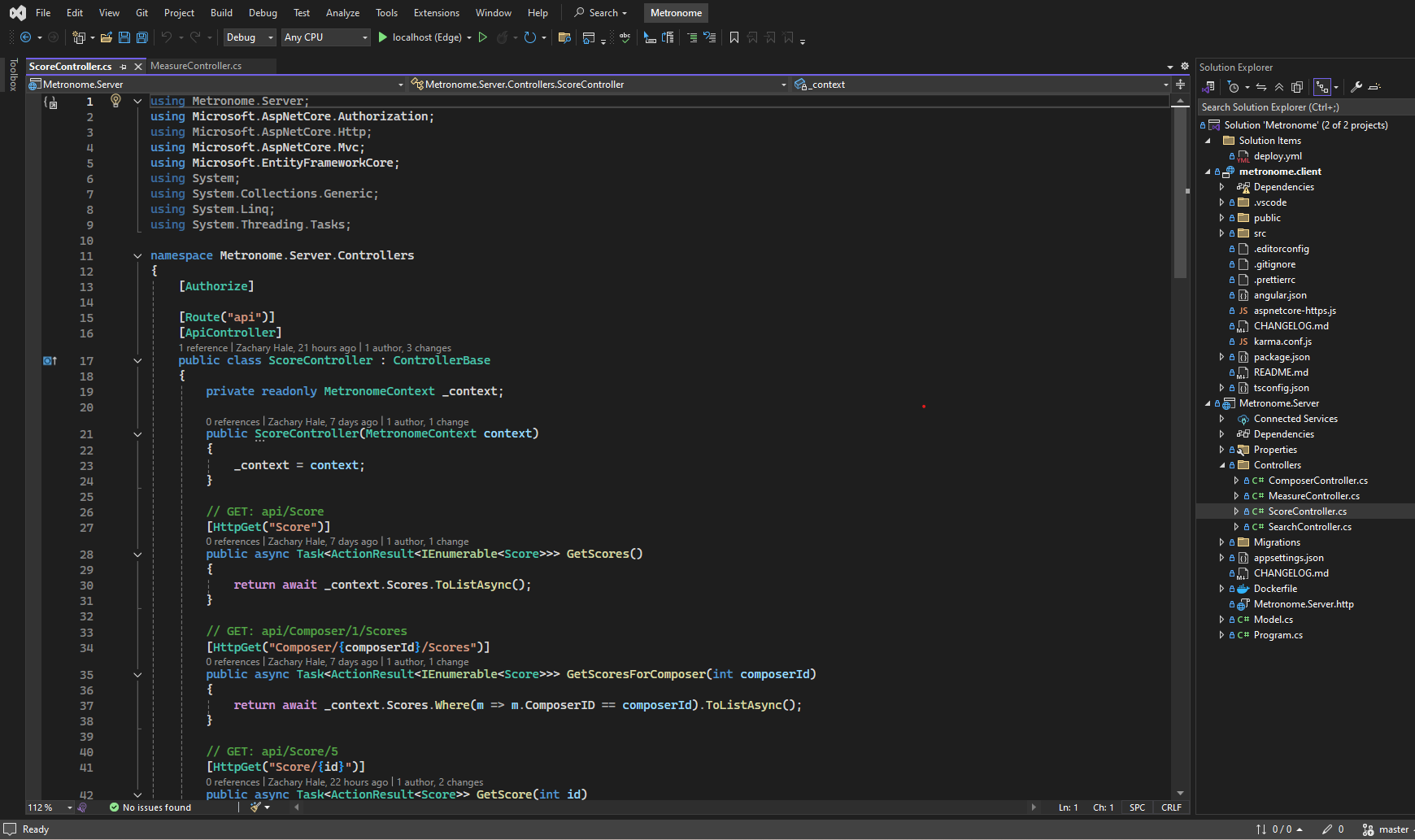
I am currently using these technologies for this project:
Digital Ocean Droplet (Ubuntu Linux)
Auth0 IdP
PostgreSQL database
ASP.NET 9.0 WebAPI with EntityFramework
Angular 20 front-end framework
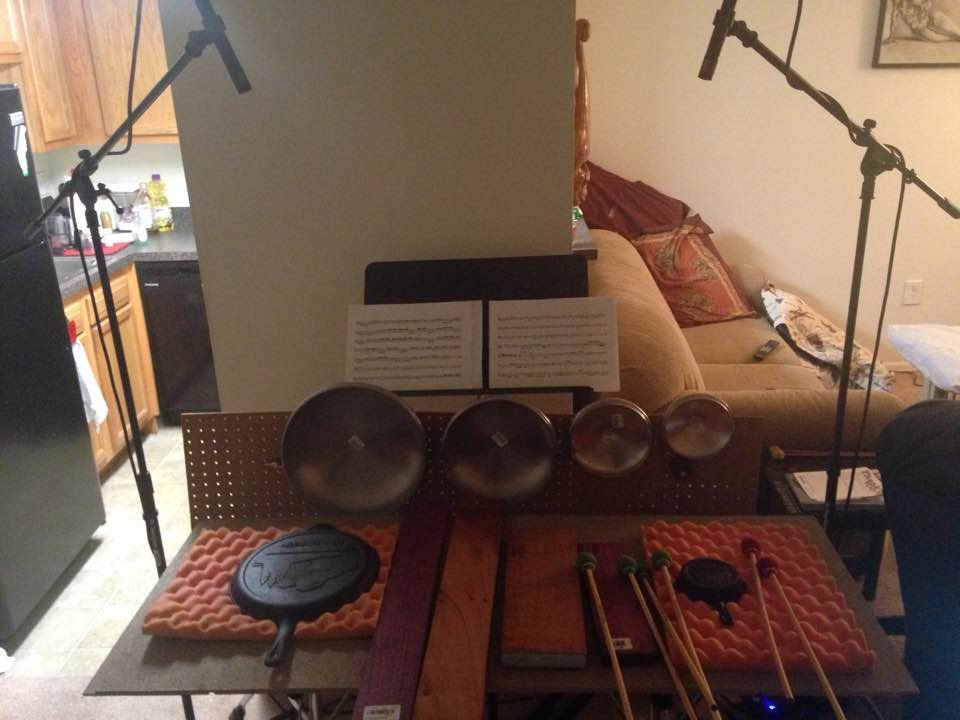
Apophenia
is written for found objects (four pieces of purple heart wood, two cast-iron skillets, and four resonant metal objects) and live electronics realized in the Max/MSP programming environment. The word Apophenia is the Greek word for the human tendency of perceiving patterns or connections in random or meaningless information. Famous examples include seeing Jesus in a piece of toast or seeing patterns in the cards while gambling. The process of creating my work included a sort of “apophenia” by generating random rhythms and sequences of notes. I searched through these sequences for “meaningful” patterns which I then use as the building blocks of the piece.
The electronics in Apophenia serve to transform the found objects. I enjoy the use of electronics to transform simple inexpensive objects into beautiful sounds. It is interesting to me to search and find a beautiful sounding pot or pan at Salvation Army for five dollars and then expand its sonic possibilities even more through my computer. It is my hope that my Max/MSP program will be able to adapt to different kinds of cast-iron skillets or pieces of wood so that the electronics will always sound integrated into the sounds and not just a static tape accompaniment.
This was result of my time at the Atlantic Music Festival in 2015, with Mari Kimura in the Future Music Lab.